A new kind of comparison
For years, Lamborghini competitors were obvious: Ferrari, McLaren, Porsche, Aston Martin, and other exotic brands. In 2026, the comparison has become stranger and more interesting. Some export buyers now compare a used Lamborghini not only with another supercar, but with a Chinese luxury EV or plug-in hybrid that offers extreme acceleration, advanced screens, quiet comfort, and lower routine maintenance. This does not mean a Chinese EV replaces a Lamborghini emotionally. It means the buyer's decision process has changed. Many customers want performance, status, technology, and daily usability in one purchase. A Lamborghini delivers emotion and brand power. A Chinese luxury EV delivers modern convenience and value. The final choice depends on what the buyer wants the car to do. For exporters, this comparison is useful because it helps qualify buyers. The buyer who wants a V10 or V12 experience should not be pushed toward silent speed. The buyer who wants modern comfort and family usability may not be happy with a low two-seat supercar. Both customers are real, but they need different vehicles.
Lamborghini wins on emotion and identity
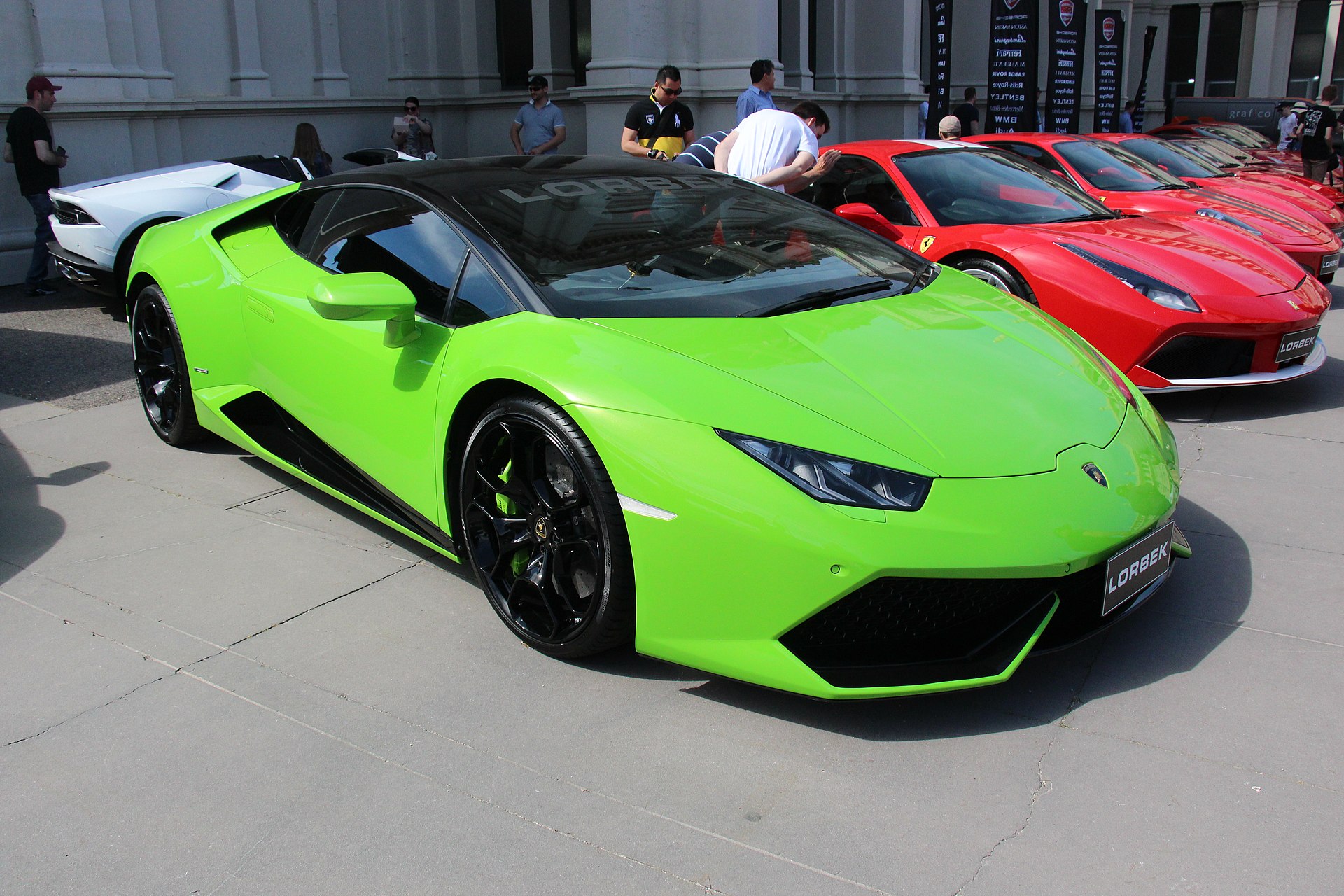
A Lamborghini is not bought only because it is fast. It is bought because of the doorline, color, engine note, badge, proportions, and cultural weight. Even people who know little about cars understand what a Lamborghini represents. That identity creates status in almost every market. For many buyers, this matters more than technology. A Lamborghini arrival at a hotel, event, dealership, or private garage creates a reaction that few vehicles can match. It is visual theater. It is not subtle, and buyers who choose the brand usually do not want subtle. This is why used Lamborghinis still hold export appeal even as EVs become faster. Acceleration can be copied. Brand mythology is harder to copy.
Chinese luxury EVs win on everyday usability
Chinese luxury EVs and plug-in hybrids have become serious because they solve daily problems. They offer quiet cabins, large screens, advanced driver assistance, rear-seat comfort, strong acceleration, and lower fuel burden. Some are easier to use every day than a supercar, especially in cities with traffic and improving charging access. For a buyer with family needs, business clients, or long commutes, a luxury EV may be more practical. It may offer performance without the stress of low ground clearance, high fuel cost, carbon-ceramic brake wear, or limited luggage space. The strongest Chinese luxury EVs are not trying to become Lamborghinis. They are creating a different definition of premium performance. Exporters should explain that clearly instead of pretending the products are identical.
Maintenance and service questions
Lamborghini maintenance is mechanical, specialized, and expensive when neglected. Buyers need service records, brake information, tire condition, battery health, diagnostics, and proof of proper care. A well-maintained Lamborghini can be reliable, but it is never a casual maintenance product. Chinese EV maintenance removes many traditional service items, but it adds battery, charging, software, high-voltage, and body-repair questions. A buyer needs to know whether the destination market can support the vehicle. Charging availability, diagnostic access, language settings, and battery confidence matter. Neither choice is risk-free. They simply carry different risks. The Lamborghini risk is specialist mechanical cost. The EV risk is technology ecosystem support.
Resale and market understanding
Lamborghini resale is supported by global recognition. Buyers know the badge. They understand the dream. Clean Huracan, Aventador, Urus, and newer flagship models can generate demand because the brand is already established. Chinese luxury EV resale depends more on market familiarity. In some regions, Chinese new-energy vehicles are gaining trust quickly. In others, buyers still hesitate because of charging, software, and long-term value questions. A model that is desirable in one city may be unfamiliar in another. For export dealers, this means local knowledge matters. Do not assume that a high-tech EV will sell everywhere. Do not assume that a Lamborghini will sell quickly just because it is famous. Price, documentation, service access, and buyer culture decide the real outcome.
Performance numbers are not the whole story
Many EVs can accelerate brutally. That changes how supercars are discussed. A Lamborghini can no longer rely only on speed numbers. It must be sold as an experience: steering feel, engine response, sound, design, ceremony, and emotional connection. This is not a weakness. It is the point. A buyer who wants only the quickest launch may choose an EV. A buyer who wants a machine that feels alive will still understand the Lamborghini. Export listings should reflect this. Do not reduce the car to horsepower. Explain the ownership occasion, the sound, the event value, the design, and the brand story.
Which buyer should choose which vehicle?
Choose a Lamborghini if the buyer wants emotion, attention, brand prestige, engine character, and a true exotic-car experience. The buyer should also accept higher maintenance costs, more careful inspection, and the need for specialist support. Choose a Chinese luxury EV or plug-in hybrid if the buyer wants technology, quiet speed, daily comfort, lower routine service, and family practicality. The buyer should confirm charging access, software compatibility, battery condition, and local service options. Choose a Lamborghini Urus or similar performance SUV if the buyer wants a bridge between both worlds: luxury presence, practicality, and exotic branding. The Urus is not an EV, but it solves many daily-use objections to traditional supercars.
How exporters should present the comparison
Compare the actual vehicle evidence with your intended use. Ask for a clear explanation of specification, inspection findings, service support and quoted responsibilities. A photograph or confident description cannot replace a vehicle-specific assessment.
Final takeaway
Lamborghini and Chinese luxury EVs are not direct replacements. They are different answers to the modern performance question. One offers emotion, sound, and global status. The other offers technology, comfort, and fast daily usability. The best export buyer is not the one who chooses the most expensive car. It is the one who chooses the car that fits their roads, image, budget, service access, and expectations. In 2026, a professional exporter should be ready to explain both worlds with honesty.