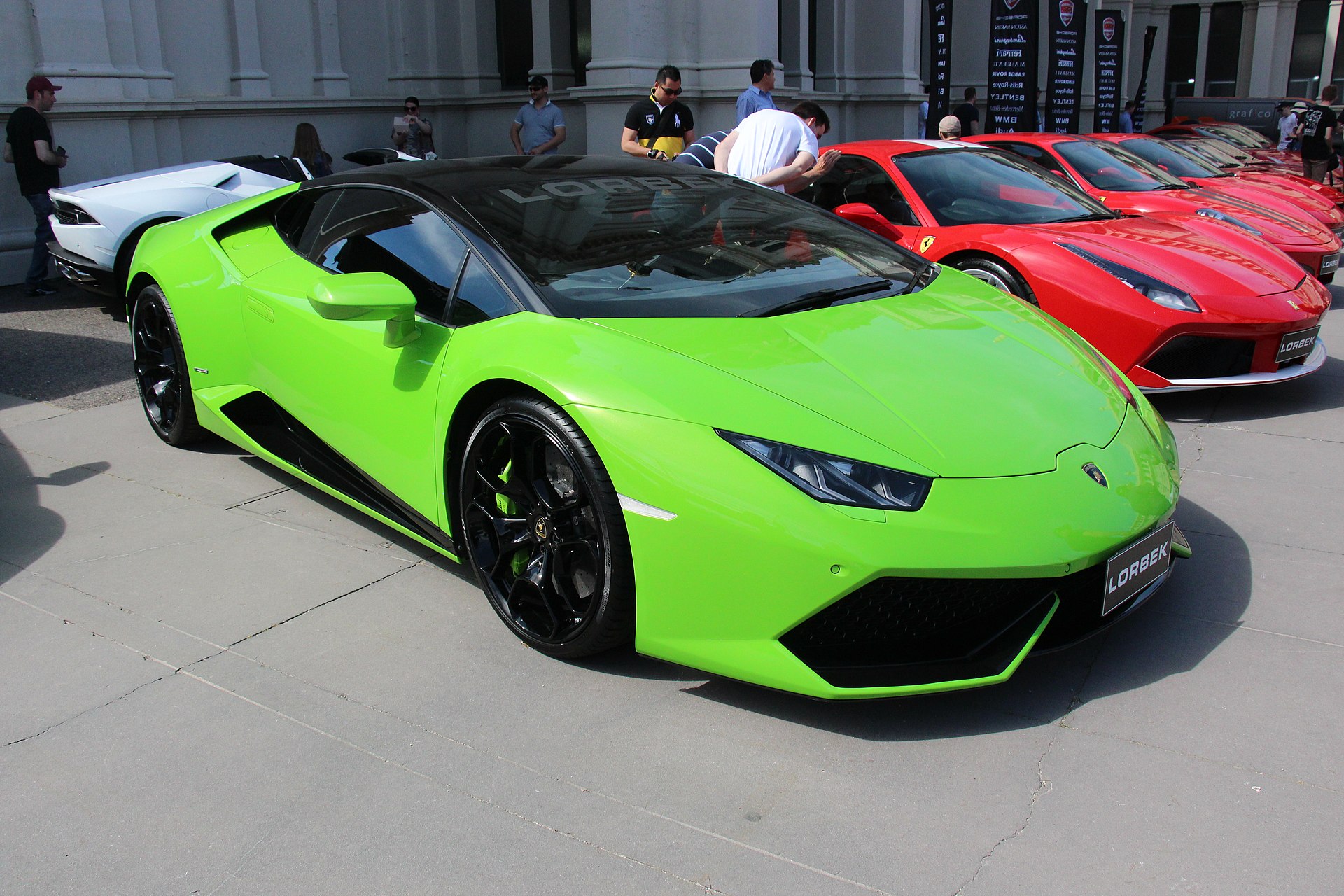
Two different Lamborghini buyers
The Aventador and Huracan are both modern Lamborghini icons, but they do not serve the same buyer. The Aventador is the flagship statement: V12 sound, scissor doors, wide-body theater, and a presence that can dominate a showroom. The Huracan is the more usable modern exotic: V10 character, easier driving, broader service knowledge, and usually lower ownership complexity. For export buyers, the question is not which car is more dramatic. The question is which car fits the destination market, buyer budget, service network, and resale plan. A car that attracts attention is useful only if it can be sold and supported after arrival.
Aventador advantages
The Aventador wins on image. It looks and sounds like a flagship in every market. Buyers who want the ultimate Lamborghini experience often dream of the V12 car before they know the technical details. For luxury dealers, hotels, collectors, and social-media-focused buyers, the Aventador can create stronger visual impact than almost anything else. It can also hold collector appeal when specification, mileage, color, and records are strong. SV, SVJ, Ultimae, and rare color combinations require careful valuation but can bring serious demand.
Aventador risks
The same drama creates risk. The Aventador is expensive to service, expensive to transport, expensive to repair, and less forgiving of weak documentation. Low ground clearance, carbon parts, transmission behavior, brake condition, tire age, lift system, and battery health all need inspection. If the destination market lacks specialist support, the Aventador may be difficult for a first-time exotic buyer. It is not the easiest car to own casually.
Huracan advantages
The Huracan is usually easier to recommend. It still offers Lamborghini sound and design, but it is more approachable. Many buyers understand the V10 platform, service information is broader, and the car can be easier to drive in normal traffic. For export dealers, the Huracan often creates a larger buyer pool. A clean LP610-4, EVO, Performante, or rear-wheel-drive model can be matched to different budgets and personalities. Buyers comparing premium import options through Panda Used Cars may find the Huracan easier to justify than a V12 flagship.
Huracan risks
The Huracan is not risk-free. Track use, accident repair, weak tires, poor service records, and hidden cosmetic work still matter. A cheaper car with uncertain history can become expensive quickly. Performante and special trims also require verification to avoid paying a premium for cosmetic imitation.
Buyer profile by destination
Destination market should guide the choice. In a market with strong supercar culture and high-net-worth collectors, Aventador demand may be stronger because the buyer wants maximum presence. In a market where buyers are entering exotic ownership for the first time, a Huracan may sell faster because it feels less intimidating. Road conditions also matter. Low front clearance, expensive carbon parts, and high repair costs make the Aventador less forgiving in difficult environments. The Huracan is still low and expensive, but it is usually easier to handle, explain, and service.
Cost and documentation comparison
The Aventador requires a more serious cost conversation. Transport, insurance, tires, brakes, battery, lift system, and service history all carry heavier financial weight. If documents are weak, the risk is magnified because the buyer is paying flagship money. The Huracan still needs detailed records, but the buyer pool is broader. Service information is easier to discuss, and the car's platform is widely understood. For export dealers, that can mean shorter sales cycles and fewer after-sale concerns.
Listing strategy
An Aventador listing should emphasize specification, originality, service records, paint condition, collector value, and transport care. A Huracan listing should emphasize condition, usability, service history, tire and brake status, and first-time buyer suitability. Both listings need strong photos and honest inspection notes. The difference is the emotional angle. Aventador sells the flagship dream. Huracan sells Lamborghini experience with more daily confidence.
Which is better for export?
For broad export resale, the Huracan is often safer. It has strong Lamborghini identity with lower operating fear. For high-end image building or collector-focused buyers, the Aventador can be stronger, but only when the car is documented and correctly priced. The best decision depends on the buyer. If the buyer wants maximum theater and can support the cost, choose Aventador. If the buyer wants a more usable first Lamborghini with strong global demand, choose Huracan.
Final advice
Do not compare the Aventador and Huracan only by horsepower or price. Compare the buyer profile. The right Lamborghini is the one the destination market can understand, maintain, and resell with confidence.